

Physics can be one of the most challenging subjects for secondary students, yet it can also be one of the most rewarding when taught in ways that spark curiosity, build conceptual understanding, and connect learning to the real world. At Teachers on Call, physics is one of the most popular high school tutoring requests we see throughout the school year, as well as during summer school, which is why we were pleased to feature this interview with Chris Meyer, Past-President of the Ontario Association of Physics Teachers (OAPT). In this conversation, Teachers on Call’s President & CEO Joanne Sallay speaks with Chris about the important role OAPT plays in supporting physics teachers and students across Ontario. From its origins more than 50 years ago to its annual conference, online student physics contests, and efforts to connect teachers across Northern Ontario, Chris shares how OAPT continues to foster professional learning, collaboration, and a strong sense of community among science educators.
As a non-profit organization dedicated to advancing the teaching of science and physics in Ontario’s secondary schools, colleges, and universities, OAPT brings together educators who are passionate about both physics and effective teaching. Through its annual conference, Grade 11 and 12 online student physics contest, teacher newsletter, classroom resources, and year-round events, the organization helps teachers strengthen their practice while creating more engaging learning experiences for students. If topics like quantum mechanics can make physics feel intimidating, OAPT’s conference programming is a reminder that the subject can also be highly engaging and fun, with sessions exploring everything from the physics of rock climbing to the physics of Pilates.
In this conversation, Chris Meyer offers insight into OAPT’s membership community, the value of its signature conference, and the practical ways the organization supports educators across the province, including teachers living in Northern Ontario. He also shares thoughtful perspectives on why high school students often struggle with physics, how educators can better bridge physics and mathematics, and why concept-first, hands-on learning remains so important in helping students build both confidence and understanding. For families, teachers, and anyone interested in STEM education in Ontario, this interview offers a valuable look at the professional learning community helping shape the future of physics teaching and learning.

About Chris Meyer, Past-President of the Ontario Association of Physics Teachers
Chris Meyer is Past-President of the Ontario Association of Physics Teachers. He has been a math, science and physics teacher in Toronto high schools with the Toronto District School Board (TDSB) for over 28 years and has long been involved in supporting physics education and professional learning for students and educators across Ontario.
Exclusive Interview with Chris Meyer, Past-President of OAPT
Teachers on Call President & CEO Joanne Sallay is a passionate advocate for STEM education and understands firsthand that science, and physics in particular, can be intimidating subjects for many students. With a deep appreciation for professional learning and teacher collaboration, she sat down with Chris Meyer, Past-President of OAPT, to discuss student success in science and physics, recent challenges including the role of artificial intelligence in learning, and even the surprising physics behind Pilates. Keep reading for their full conversation, packed with thoughtful insights and practical advice to help make physics more accessible and engaging for teachers and students across Ontario.
The Ontario Association of Physics Teachers (OAPT) has played an important role in supporting physics educators over the years. Can you share how the organization was founded and how it has evolved to meet the needs of teachers today?
It was founded over 50 years ago by a group of Ontario teachers who met at a physics education conference in the United States. Wondering why they traveled so far to meet each other, they founded the OAPT to help high school and university teachers meet, learn, and build a learning community in Ontario.
Can you tell us more about your membership base? Is OAPT primarily composed of Grade 11 and 12 high-school physics teachers in Ontario, or do you also have educators teaching Grade 9 and 10 science, as well as elementary teachers with an interest in physics?
Our members are high school teachers and university instructors who focus on first year or teaching in general. Most of our high school members also teach grade 9 and 10 science, so we offer supports for the physics strands of these courses as well.
Your annual conference is a signature event for the organization. Can you share where it typically takes place and how far delegates travel to attend? What makes this gathering especially valuable for physics educators?
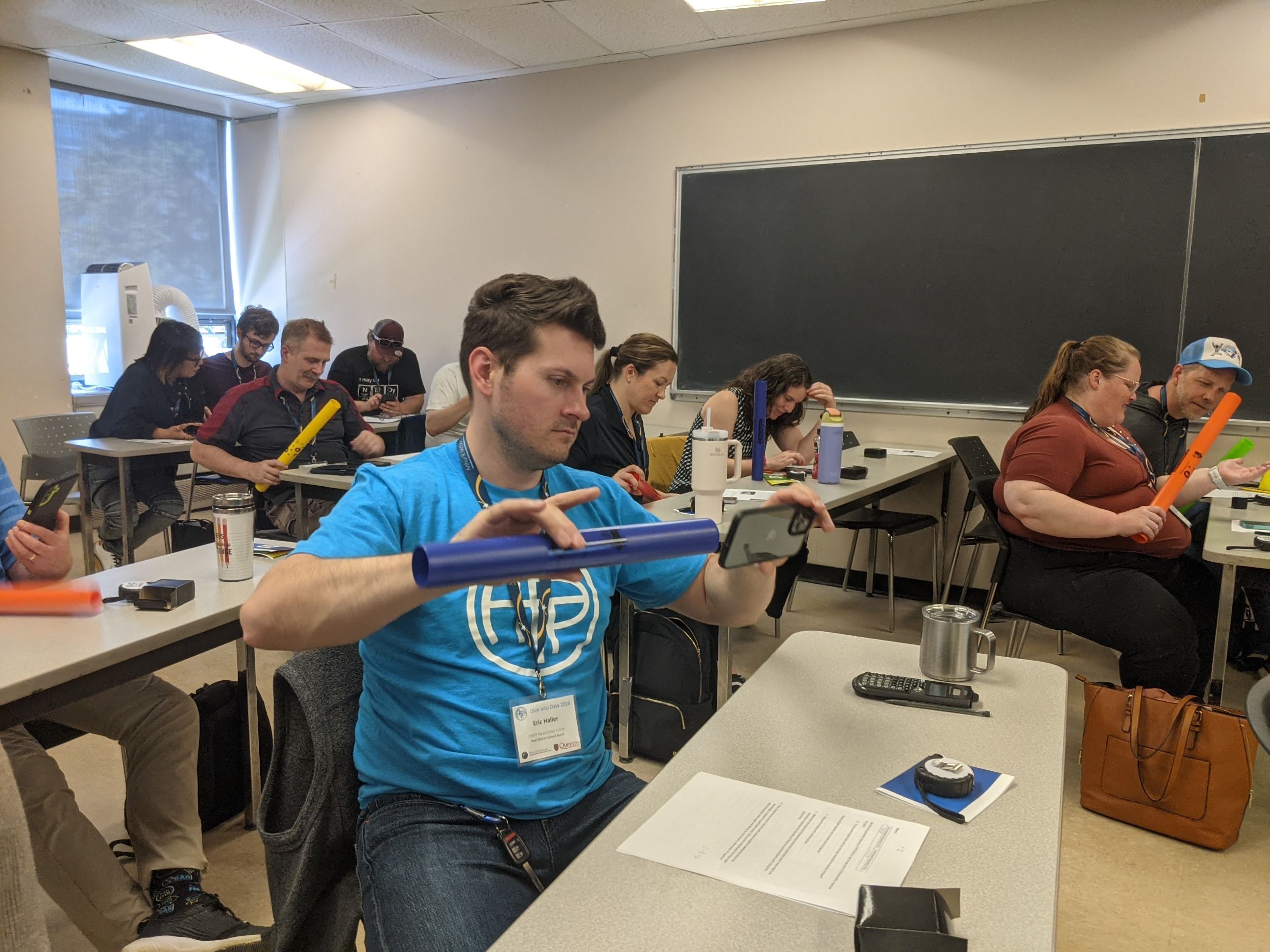
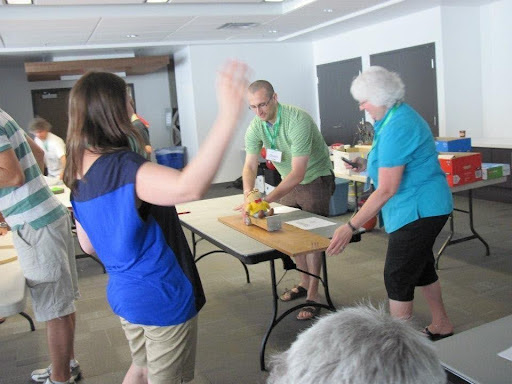
Each year, the OAPT conference is hosted by a different Ontario university, so we have travelled around the province from London, to Kingston, to St. Catherines, and many places in-between. This gives high school teachers a chance to explore the host institution and allows our hosts to connect with secondary teachers. Our conference always has a very pragmatic approach: lots of hand-on workshops and presentations by teachers, for teachers. Since our organization is smaller than some others, we have formed a tight-knit community that enjoys the chance to get together, talk physics, talk teaching, and have a great time.
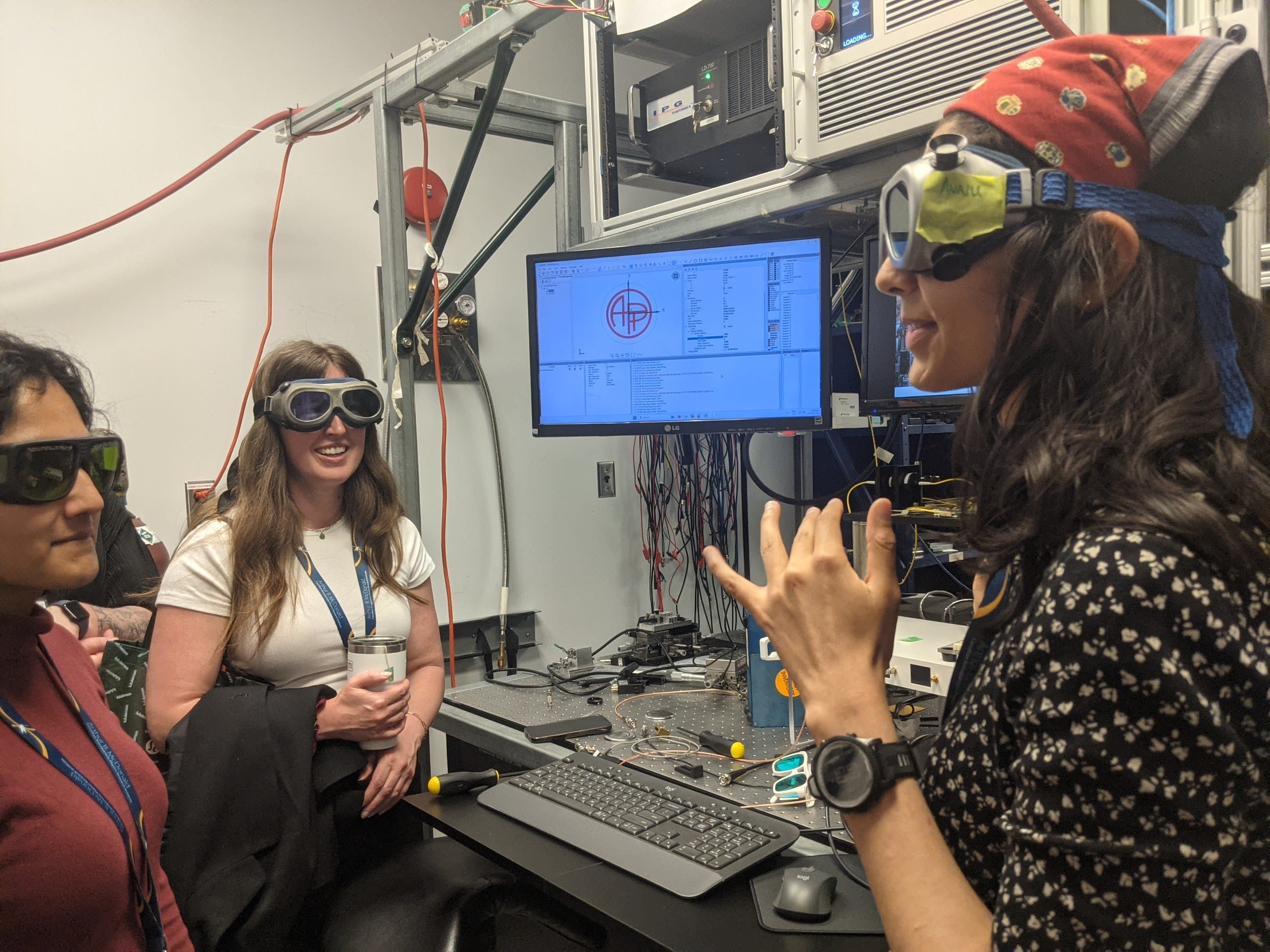
Your past conferences have featured engaging and creative workshops—such as “The Physics of Rock Climbing.” What types of sessions or themes can delegates look forward to at future conferences?
Our members have many areas of interest and expertise, which makes our conferences so enriching and rewarding. We have sessions dedicated to university-level instruction, fun hands-on sessions for grade 10 science, the physics of Pilates, the weirdness of quantum mechanics, and much more. There is always something different and new each year.
OAPT’s Grade 11 Physics Contest is a standout initiative. Can you tell us more about the contest’s goals and the impact it has on student engagement and interest in physics?
We want to provide Ontario physics students with a fun and engaging contest that challenges their physics skills and encourages them to learn more. We have recently added a second tier to the contest, allowing grade 12 students to compete amongst themselves. The contest focuses on good-old physics content and topical issues within the physics world, to encourage students to explore beyond their classroom learning!
Physics is often seen as one of the more challenging subjects for students. From your perspective, why do many students struggle with physics, and how can educators help make the subject more accessible and engaging?
Physics education is fortunate to have been one of the first disciplines to take a scientific approach to the challenges of learning. Over the past 30 years, physics education research has found many improvements to our teaching practice that has helped make physics learning more interesting and more intuitive. One of the most important changes has been a conceptual, constructivist focus: help students build an understanding of the ideas first, then teach them the math skills and the formalism for the problem solving. This helps to make their learning meaningful, which is a surprisingly powerful motivating factor. Lots of fun and engaging hands-on tasks and challenges also improves the learning experience. The kind of physics learning that is promoted in the workshops of our conference is likely very different from what folks might remember 30 years ago!
Physics and math are deeply connected, yet many students struggle to bridge the two. How can educators better support students in developing the mathematical skills and confidence needed to succeed in physics?
There are two important things that can help the development of math skills in physics learning. First, any math work must be purposeful. In science, math is never the goal, it is always a tool used to answer a question. Give students interesting and meaningful tasks, and there will be a stronger motivation for using math and persisting with it when it gets challenging. Second, students need more structure and clear models for the thinking processes that lead to mathematical work. In physics, do this using specialized diagrams like force diagrams or energy bar charts. These visual tools scaffold and prompt students’ physical thinking, helping them set up their mathematical expressions.
In previous generations of physics instruction, physics was largely taught as a math class with surprisingly little physical reasoning. This is the wrong way to teach physics! The physics ideas need to come first and then students have a clear sense of the math they need to execute.
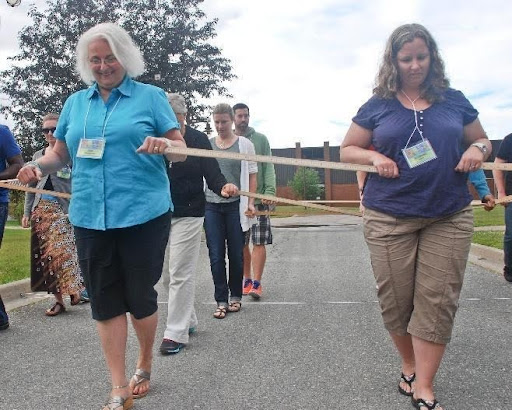
OAPT plays an important role within the broader science education community. How does the organization collaborate with groups like Science Teachers' Association of Ontario (STAO) and American Association of Physics Teachers (AAPT) to support educators?
We have a long tradition of collaboration with these two groups. Many of our OAPT members are also members of these organizations and help to share ideas between them. We also present at each others’ conferences to help keep up these connections.
It’s encouraging to see a focus on engaging educators from Northern Ontario. For teachers in these regions (North Bay, Sault Ste. Marie, Sudbury, Thunder Bay, Timmins), what types of support, resources, or opportunities does OAPT provide to ensure they feel connected and supported?
The OAPT newsletter is an important tool that we use to connect teachers from across Ontario. The wealth of digital resources that are shared through this newsletter helps bridge the great distances in our province. It can be quite challenging for teachers from Northern Ontario to travel to our annual conference, so for the last number of years we have offered a travel subsidy to assist them.
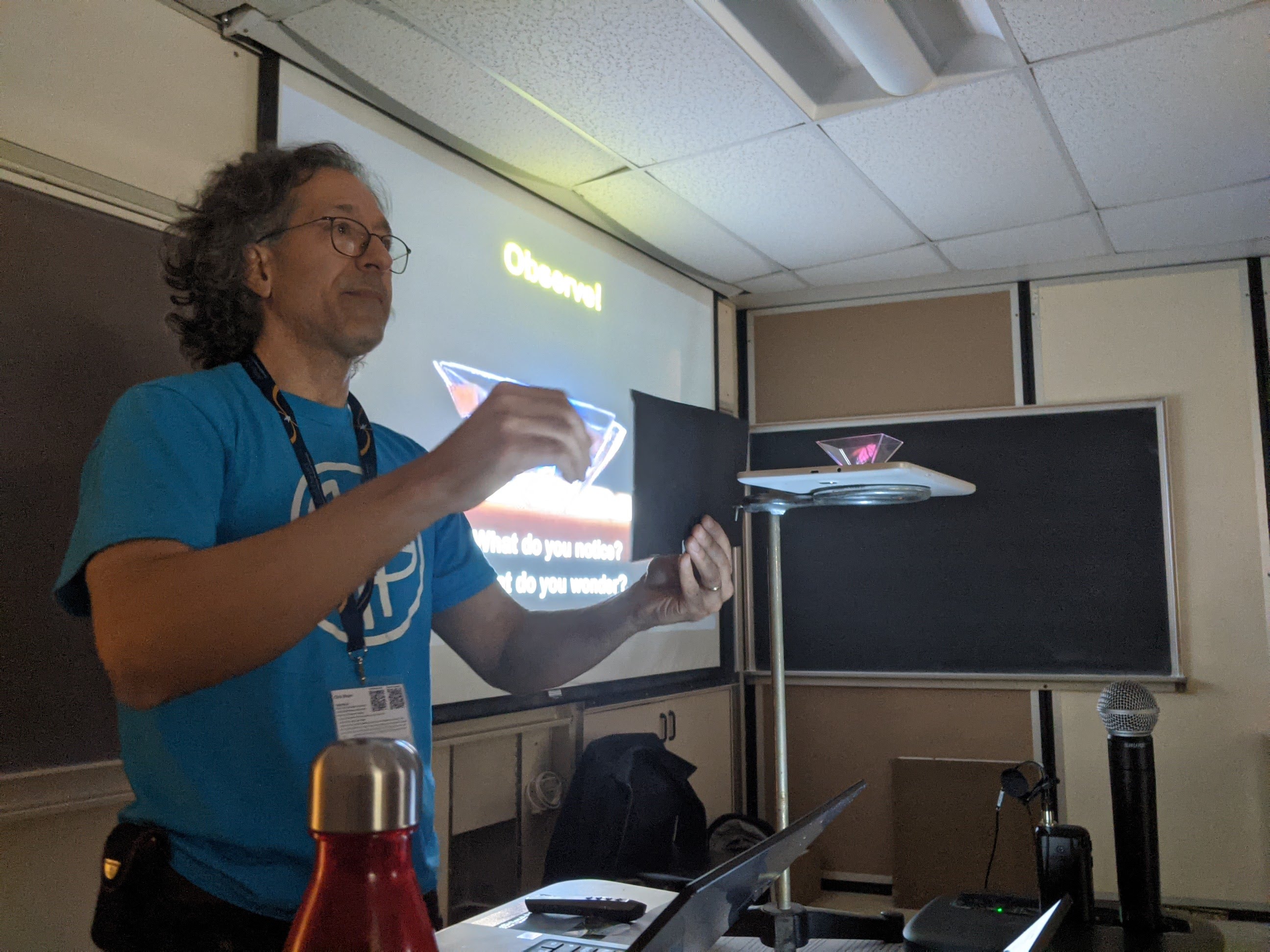
As education continues to evolve, what excites you most about the future of physics teaching and learning? What is next for OAPT, and how do you hope to continue inspiring both educators and students across Ontario?
Physics teachers love solving problems. The last 30 years has seen the challenge of physics learning become a problem worthy of the efforts of our most talented members. And problems there are! There is so much left to explore about how people learn the laws of motion, how energy works, and other traditional physics topics along with more recent challenges such as the role of artificial intelligence in learning. There has been so much improvement in the field of physics education that with such an active and inquisitive community, we can surely expect much more. There are many opportunities for young teachers to take up the newer pedagogies and make their mark on physics teaching in Ontario. While my physics career is coming to a close as I approached retirement, I will be very excited to see how the physics teaching community continues to evolve in the decades to come.
In Conclusion: Generating Momentum in Physics Education
At Teachers on Call, we know that strong student outcomes are closely connected to strong teacher support. Conversations like this one with Chris Meyer highlight the important role professional organizations such as the Ontario Association of Physics Teachers (OAPT) play in equipping educators with practical strategies, meaningful community, and ongoing opportunities to grow in their craft. In a subject like physics, where students are often asked to combine conceptual reasoning, mathematical thinking, and problem solving, that kind of professional learning can make a lasting difference in the classroom and help students engage more confidently with STEM learning.
As a tutoring service that supports students in science, physics, biology, chemistry, math, and other STEM subjects throughout the school year and during summer school, we also see firsthand how valuable strong physics teaching can be. Whether a student needs help with physics homework, unit tests, exam preparation, or building confidence in challenging concepts, quality instruction and support can make all the difference.
This interview is also part of a broader Teachers on Call focus on spotlighting teacher professional development in STEM across Ontario and Canada. If you enjoyed this conversation, you may also wish to read our blog, Get Students Excited to Learn Science with STEM Fairs, Projects and Expos, featuring our interview with Reni Barlow, Executive Director of Youth Science Canada, which explores how science fairs, STEM projects, and related enrichment opportunities can spark student curiosity and deepen engagement in science learning. For a math perspective, you can also explore our past interview, Advancing Math Education in Ontario: Insights from OAME Experts Wayne Erdman and Ron Lancaster, and stay tuned for our upcoming conversation with Nathalie Rudner, Executive Director of the Science Teachers' Association of Ontario (STAO). Together, these conversations reflect an important truth: when teachers are supported with strong professional learning communities, students benefit too.
Related Articles View All
"Plant Attack!" by Erin Silver: A Canadian Nonfiction Book Exploring Plant Defences, Nature, and STEM Learning
Canadian author Erin Silver discusses Plant Attack!, a fascinating nonfiction book that introduces young readers to plant science, STEM learning, and the surprising ways plants defend themselves.
“Dogs vs. Humans” by Stephanie Gibeault: A Playful STEM Showdown of the Five Senses
Discover Dogs vs. Humans by Stephanie Gibeault, a playful STEM-themed Forest of Reading nominee exploring how dogs and humans experience the world through the five senses.
