

There is something quietly powerful about stories that help children notice the small wonders around them. In a world that often feels fast-paced and screen-filled, books that reconnect young readers with nature, curiosity, and care feel especially meaningful. The Weedflower, is a debut book written by Canadian author Elizabeth Davaze and illustrated by Marianne Ferrer, beautifully explores themes of environmental science, resilience, and the hidden magic of everyday places. This inspiring picture book, published by OwlKids Books, has been nominated for the 2026 Blue Spruce Award for JK to Grade 2 as part of Canada’s beloved Forest of Reading program. Keep reading for an exclusive interview with Southwestern Ontario author Elizabeth Davaze.
Parents and educators will find The Weedflower to be a meaningful addition to any young reader’s bookshelf. The story encourages children to slow down, observe the natural world, and recognize the value of even the smallest living things. In classrooms and at home, it opens the door to conversations about environmental stewardship, empathy, and perspective-taking. Research shows that these early connections to nature can support both wellbeing and environmental awareness. The in-person and online tutoring team at Teachers on Call recommends this book because it supports early science learning while nurturing creativity and emotional awareness. It is especially powerful for sparking discussions about how children can care for their surroundings and use their voices to protect what matters to them.
Why the Forest of Reading Continues to Grow Young Readers’ Love of Books
The Forest of Reading remains Canada’s largest recreational reading initiative, inspiring children and teens from coast to coast to engage with outstanding Canadian literature. Organized by the Ontario Library Association, the program features a wide range of award categories that celebrate Canadian authors and illustrators across different age groups. What makes the program truly unique is that young readers themselves vote for their favourite books, giving students a meaningful role in the literary community. Each year, the program culminates in the vibrant Forest of Reading Festival held at Harbourfront Centre (235 Queens Quay West, Toronto, ON M5J 2G8), where thousands of students gather to celebrate reading and meet the creators behind their favourite stories. At Teachers on Call, we are proud to support programs that amplify student voices and foster a lifelong love of literacy.

About the Author: Elizabeth Davaze
Elizabeth Davaze is a Canadian author from Kincardine, Ontario, whose storytelling is deeply rooted in observation, curiosity, and lived experience. Her debut picture book, The Weedflower, reflects her ability to find wonder in everyday moments. Before becoming an author, Elizabeth worked as a reporter and photographer, interviewing a wide range of individuals across Canada. She now lives near the shores of Lake Huron in Bruce County, where she spends her time writing, walking local trails, and creating art. You can also read more about her journey in this Kincardine Independent feature.
About the Illustrator: Marianne Ferrer
Marianne Ferrer is an illustrator based in Montreal, Quebec. Born in Venezuela, she moved to Canada in 1998 and went on to study illustration and design at Dawson College (3040 Sherbrooke St. W., Montreal, QC H3Z 1A4), followed by graphic design at Université du Québec à Montréal. Her artwork in The Weedflower brings warmth and life to the story, using a thoughtful colour palette that evolves alongside the emotional journey of the characters.
About the Book
The Weedflower tells the story of Sam, a young student who discovers a tiny dandelion growing in an unlikely place on her school playground. What begins as a small moment of curiosity soon blossoms into a shared experience, as other children gather to care for the flower and watch it thrive. The story gently explores themes of resilience, community, and how we value the natural world around us. You can enjoy a read-aloud of the story through this CBC Kids reading on YouTube, or learn more about the creative process in this Owlkids Creator Corner interview with the author and illustrator.
Read Our Exclusive Interview With Elizabeth Davaze
The Weedflower is such a gentle and hopeful story. What inspired you to write about a small flower growing in an unexpected place on a school playground?
I like to tell people that The Weedflower is a true story! (More accurately, probably, it’s based on real events.) My young daughter came home from school one day, eager to tell me about the incredible thing she had found on the playground — a yellow flower! At first I thought it was funny because dandelions are very commonplace around here, but it was very special to her because it was so unexpected in her otherwise dusty school yard… and that sparked the idea for me.
Sam forms a special connection with the flower. What do you hope young readers learn about curiosity, care, and paying attention to the natural world?
If you look very closely at any small thing, there is usually much more to it than what you first thought. Even something that feels very ordinary, like a rock, or a cloud, or a small creature, when you spend time and pay attention, you will almost certainly find some magic. I think children have a special ability to notice things about the natural world — sometimes adults need help remembering!
The story shows how something small can bring joy and imagination to many children. How can parents and educators use this book to encourage creativity and outdoor exploration?
Especially in today’s screen-dependent world, it’s important to carve out time for exploration. Kids have an innate connection to the natural world, and when presented with the opportunity to look closely at it, they are experts. In The Weedflower, students in a dusty, barren schoolyard find a small bit of nature to engage with. Ask your kids/students what small pieces of nature they can find around them. Even in a schoolyard, there is plenty to observe! By getting curious about something, and paying attention to it, we can’t help but value it more.
When the adults decide the flower has to go, it creates an important moment in the story. How can this be used in the classroom to talk about different perspectives and decision-making?
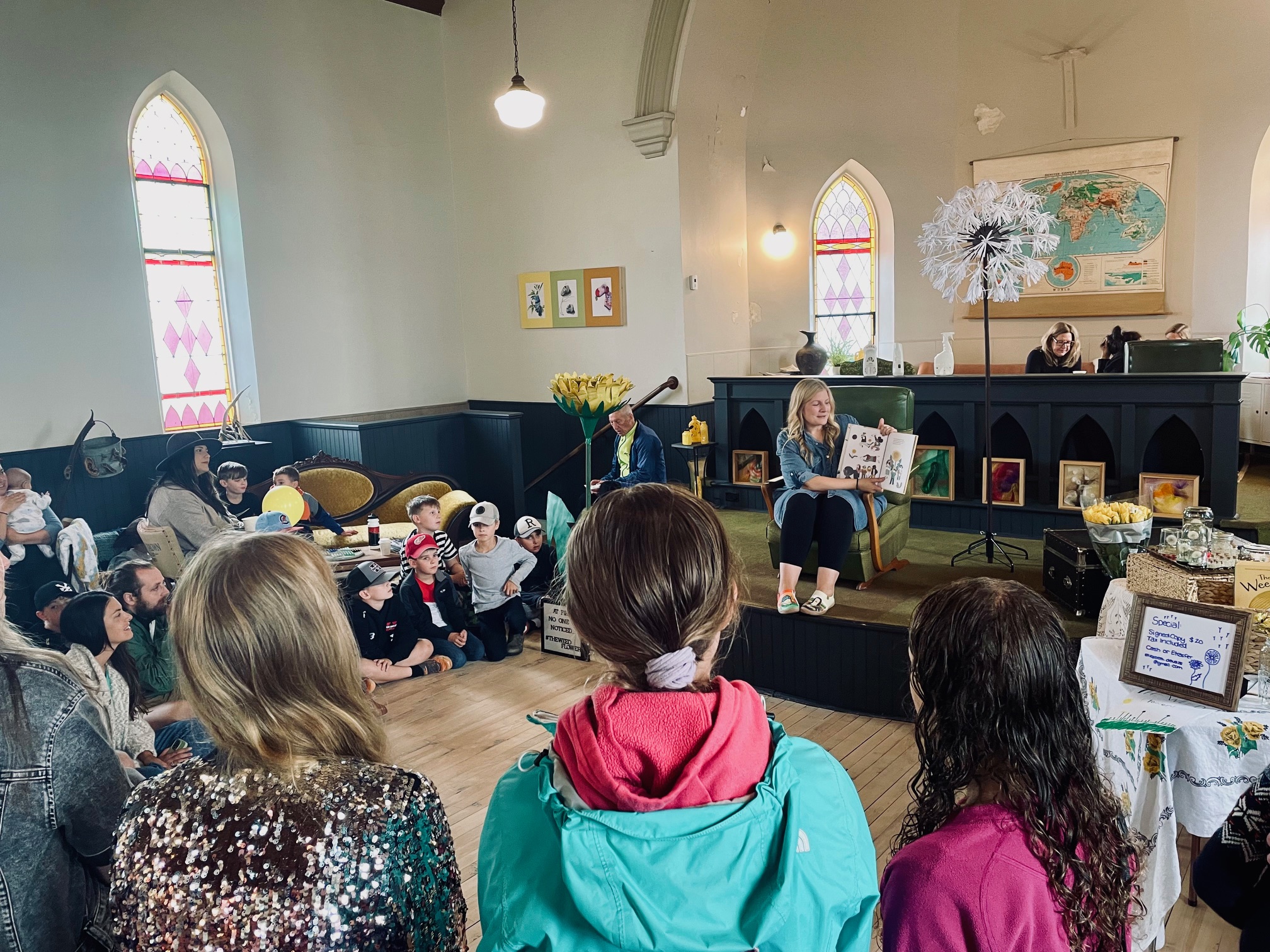
Many of the students I’ve spoken with really related to this pivotal moment — the conflict between the kids and the adults. What kid hasn’t tried to convince an adult in their life about something important to them? I think this opens an interesting opportunity to discuss the benefit of hearing different perspectives, having empathy, and how to dissent peacefully. I like to challenge students to “try on” the different viewpoints in The Weedflower. Why might the adults want the flower to go? Why do the students want it to stay? Can we understand the others’ viewpoint even if we don’t agree?
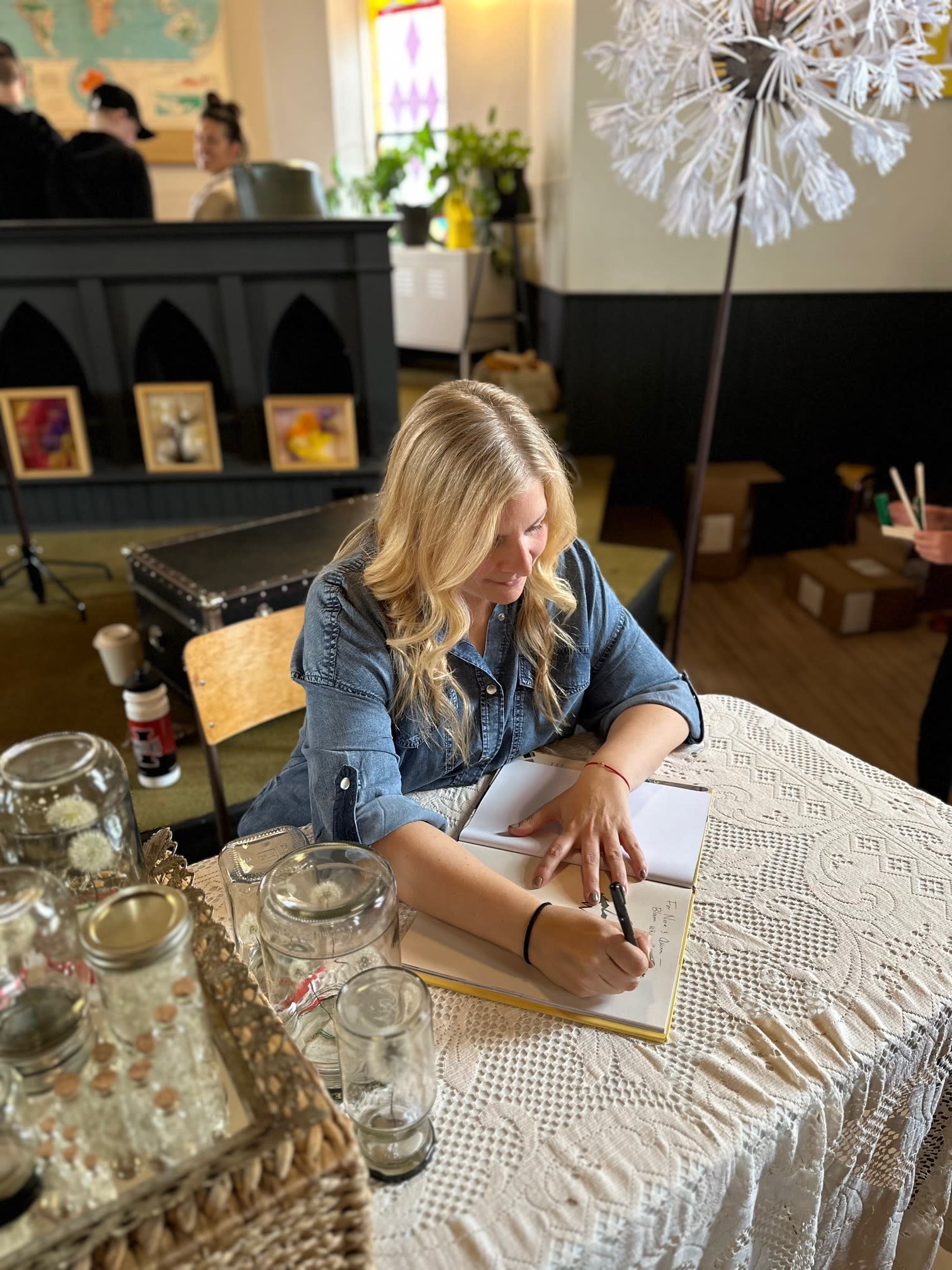
Marianne Ferrer’s illustrations add warmth and life to the playground setting. How do you think the artwork helps convey the emotional journey of the story?
Marianne’s brilliant idea for the colour pallet absolutely brought this book to life! I loved the look of the illustrations from the start, but it took me a shockingly long time to catch on that the entire thing was created using only “dandelion” colours. At the beginning, obviously the schoolyard is dull, and the pages are muted… and as the weedflower grows and begins to take over, the illustrations also blossom and grow. The increasing warmth of the pages really seems to correlate to students’ growing love and attachment to the flower.
As your debut picture book, what was the most surprising or rewarding part of the process of bringing The Weedflower to life?
There have so many exciting moments throughout the process, but I love when a friend sends me a photo of The Weedflower on a shelf in a small, independent bookstore across the country. Lately it has been incredibly fun when I spot our book in an unexpected place, like a far-away library, or even a cameo in a celebrity home tour on tv!
Your background as a journalist and photographer is so interesting. How have those experiences influenced the way you observe the world and tell stories for children?
My background in journalism and photography certainly trained me to notice the magic in the mundane, to find the ‘hook’ in the most normal situation. Stories are everywhere!
If children take one lesson away after reading The Weedflower, what would you most hope it is?
I hope that kids can see why Sam gets so attached to the weedflower — how a small piece of nature can feel so precious and worthy of protecting, even if it might seem unexceptional to others. Sam’s love and care for the weedflower helps it to thrive (and ultimately win!) I want kids to know they have power, and as the future guardians of the earth, I hope they will use their voices.
You live near the shores of Lake Huron and spend time walking local trails. Is there a favourite place you go to feel inspired or to come up with new story ideas?
Nearly all of my stories have been conjured up while walking the amazing local trail system right outside my back door. I walk there nearly every day, and feel very fortunate to have this buffet of inspiration. I’m always noticing new things and feeling excited about what I can find. This was certainly true for…
What’s next for Elizabeth Davaze?
My upcoming picture book, The Someday Clover! Published by Owlkids, it will be out next year, in spring 2027.
~
The Weedflower is a gentle yet powerful reminder that even the smallest things can create meaningful change. Blending environmental science with heartfelt storytelling, it shows young readers how curiosity about the natural world can grow into empathy, stewardship, and a lifelong appreciation for biodiversity. Encouraging children to build these meaningful connections is more important than ever, as highlighted through the David Suzuki Foundation’s work on connecting youth with nature. As part of the Forest of Reading program, the book also celebrates the importance of student voice and choice in shaping Canada’s literary landscape. At Teachers on Call, we are always excited to highlight books like this that inspire curiosity, compassion, and a lifelong love of reading.
Looking for more ways to get young readers invested in reading and STEM? Check out our recent Hooked on Books interviews with other science-loving authors nominated for the Forest of Reading awards. Don’t miss This Is How a Ball Rolls by Heather Tekavec, Ana’s Adventures at the Mine by Ana Gabriela Juárez, Dogs vs. Humans by Stephanie Gibeault, and Chomp-O-Rama by Maria Birmingham.
Related Articles View All
From an 1870s Classroom to a Modern University Campus: Family Learning at Doors Open Markham
Explore Markham’s past and present during Doors Open Markham, with 17 sites offering family-friendly adventures in history, art, architecture, education and culture.
Splashing Into Marine Science: "Octopus Ocean" with Canadian Author Mark Leiren-Young
Dive into the fascinating world of octopuses with Canadian author Mark Leiren-Young. Discover how Octopus Ocean: Geniuses of the Deep brings marine science, animal intelligence and ocean conservation to life for young readers.
From Theoretical Physics to a Ghost Village: Family Learning at Doors Open Waterloo Region
From theoretical physics to a ghost village, discover family-friendly learning adventures at 27 fascinating sites during Doors Open Waterloo Region 2026.
