

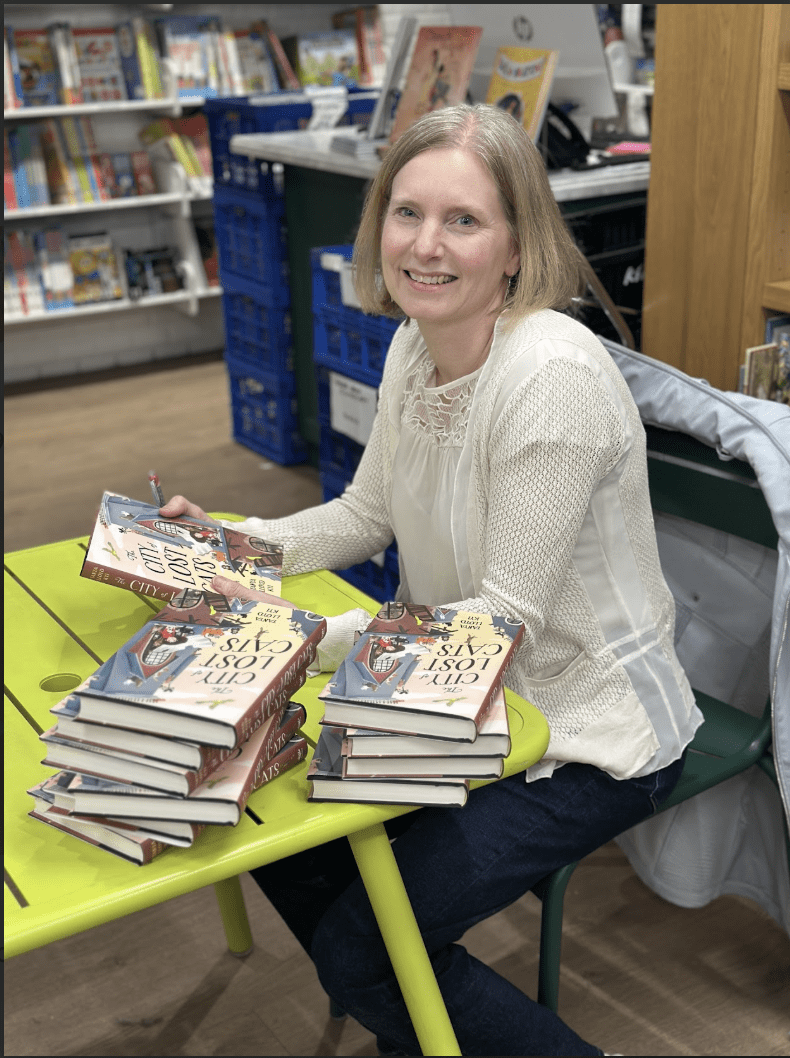
What does it truly mean to find a place where you belong? In The City of Lost Cats, acclaimed Canadian author Tanya Lloyd Kyi delivers a heartfelt and imaginative story about community, belonging, and resilience. Nominated for the Silver Birch Fiction Award, which recognizes books for elementary readers in grades 5 and 6, and published by Tundra Books, this middle-grade novel blends humour and adventure through a unique multi-perspective narrative that includes both human and animal voices. At its centre is Fiona, a determined young girl who discovers an abandoned mansion filled with stray cats and must help save it from demolition. Literary themes of finding home, leadership, and collaboration shine throughout, complemented by early introductions to architecture, urban planning, and historic preservation, all explored through a strong sense of community. Keep reading for an exclusive interview with Vancouver, BC author Tanya Lloyd Kyi.
Parents and educators will find The City of Lost Cats especially meaningful for young readers navigating change, identity, and the importance of community. Fiona’s journey offers opportunities to explore conversations around housing, empathy, and working together to solve problems. The imaginative perspectives of the animals add humour while reinforcing deeper lessons about leadership and cooperation. The in-person and online tutoring team at Teachers on Call recommends this book as a thoughtful and engaging read that encourages students to reflect on their role in shaping the world around them.
Why Young Readers Across Canada Love the Forest of Reading
The Forest of Reading is Canada’s largest recreational reading program, organized by the Ontario Library Association. Each year, it invites children and teens from across the country to read a curated selection of Canadian books and vote for their favourites. With multiple award categories in both English and French, the program celebrates a wide range of voices and stories. What makes it particularly impactful is its emphasis on student choice, giving young readers the power to decide the winners. The program culminates in the Forest of Reading Festival at Toronto’s Harbourfront Centre (235 Queens Quay West, Toronto, ON M5J 2G8), where students gather to celebrate literature alongside authors and illustrators. At Teachers on Call, we are proud to support initiatives that inspire a lifelong love of reading and empower students to engage with stories in meaningful ways.
About the Author
Tanya Lloyd Kyi is a prolific Canadian author who has written more than 35 books for young readers, spanning both fiction and non-fiction. She studied writing at the University of Victoria in British Columbia, located in Oak Bay and Saanich (3800 Finnerty Rd, Victoria, BC V8P 5C2), before building a diverse career as an author of books for young readers. In 2020, she released Me and Banksy, a middle-grade novel that thoughtfully explores themes of security and privacy. The book went on to be recognized as a finalist for the British Columbia and Yukon Book Awards. She currently resides in Vancouver, British Columbia, where she draws inspiration from the city’s vibrant culture and complex urban landscape. In addition to writing, she teaches at the University of British Columbia (2329 West Mall, Vancouver, BC, Canada V6T 1Z4), bringing her passion for storytelling and learning into the classroom.
About the Book
The City of Lost Cats follows Fiona, a young girl grappling with loss and change, who stumbles upon an abandoned mansion inhabited by a lively group of stray cats and two mischievous budgies. When the building is threatened by redevelopment, Fiona teams up with the animals to try to save their shared home. Told through multiple perspectives, the story blends humour, heart, and adventure while exploring themes of belonging, leadership, and community action. CBC recently named The City of Lost Cats one of the 20 Canadian children’s books to read this summer.
Check out our Exclusive Interview with Vancouver author Tanya Lloyd Kyi
One of the most delightful aspects of the book is its multi-perspective narration, switching between Fiona, Cot, Piper, and the rest of the colourful cast of characters. What drew you to this storytelling structure, and how did you decide whose voices needed to be heard?
I wish I had a wise and thoughtful answer to this question. I was supposed to be writing a completely different book (about computer sleuths tracking a mystery), when I noticed all the lost cat posters around my neighbourhood. The voices of different cats kept popping into my head, and I’d come home from my walks to scribble down their stories, rather than what I was supposed to be writing!
I didn’t really decide which voices deserved to be heard. Cot and Piper, especially, demanded to be heard. And the birds wouldn’t be quiet no matter what I said. I didn’t mean to fall in love with a collection of misguided, opinionated, furry and feathered friends, but that’s what happened. (My editor was rather surprised when a collection of cat voices landed on her desk, instead of the promised computer-kid manuscript!)
Fiona’s connection to the abandoned mansion is deeply tied to her own search for stability after losing her parents. What do you hope young readers learn from her journey as she finds strength, purpose and a sense of home in unexpected places?
Fiona and the cats must fight a beast, save a mansion, and build a place that feels like home. These problems are much too big for one girl and a collection of cats to handle. In the same way, the problems we face in our own world often seem overwhelming. But impossible things are easier when you’re part of a community. Kids (and cats) have more power than they think, if they’re willing to work together.
The animal characters, especially Cot and Piper, each have strong personalities and competing priorities. How did you approach writing from the point of view of cats and parakeets while keeping their perspectives both funny and meaningful?
As I was writing this manuscript, my daughter, Jules, was studying political science and gender studies at university. She often sent me interesting articles and ideas about leadership. So as I was writing about Cot, Piper, and Tarantino, I was learning about the difference between leadership as power and leadership as service to a community. And I was thinking about different ways people (um… cats) become leaders, and the different strategies they use to govern. In the novel, some strategies are more successful than others!
(This sounds very intellectual, but I also spent plenty of time watching cat videos on YouTube, while insisting I was doing important research.)
The book touches on issues related to housing, development and community spaces. How might parents or educators use these elements to spark age-appropriate conversations about neighbourhood change, advocacy and the importance of feeling safe and included?
I secretly wish I was an urban planner. I’m fascinated by the ways towns and cities are built. And you can’t live in Vancouver (or any other big city) without noticing the way some housing seems to be designed to make money for a few investors rather than create space for a community. I love my city, but I grew up in a small town. If I could design my ideal place, it would have gardens and playgrounds and picnic tables. And libraries, of course! People would always say hello as they passed on the street.
I would love if readers of The City of Lost Cats started designing their own ideal cities and neighbourhoods, the way Fiona does in the novel. And we don’t always need urban planners. Sometimes, we can start by meeting our neighbours and talking about making our streets a little friendlier for everyone. (My own street had its second annual block party last summer — it was so fun!)
If teachers are looking for ways to explore these concepts with students, Royal Institute of British Architects (RIBA) offers some amazing educational resources. And there are more ideas in the Educator’s Guide to The City of Lost Cats.
You have written more than 35 books for young readers, covering topics like activism, science and social issues. How did your past work shape your approach to The City of Lost Cats, and what continues to draw you to stories rooted in community and change?
It’s easy to feel small in this world, but we’re not helpless. I love discovering stories about scientists, activists, and ordinary people who saw a problem, became obsessed with solving it, and ended up changing the world. We can be those people! Whether I’m writing non-fiction and researching amazing achievements, or writing fiction and making up activist characters, I’m thinking about the ways that we can stand up to power and make things better.
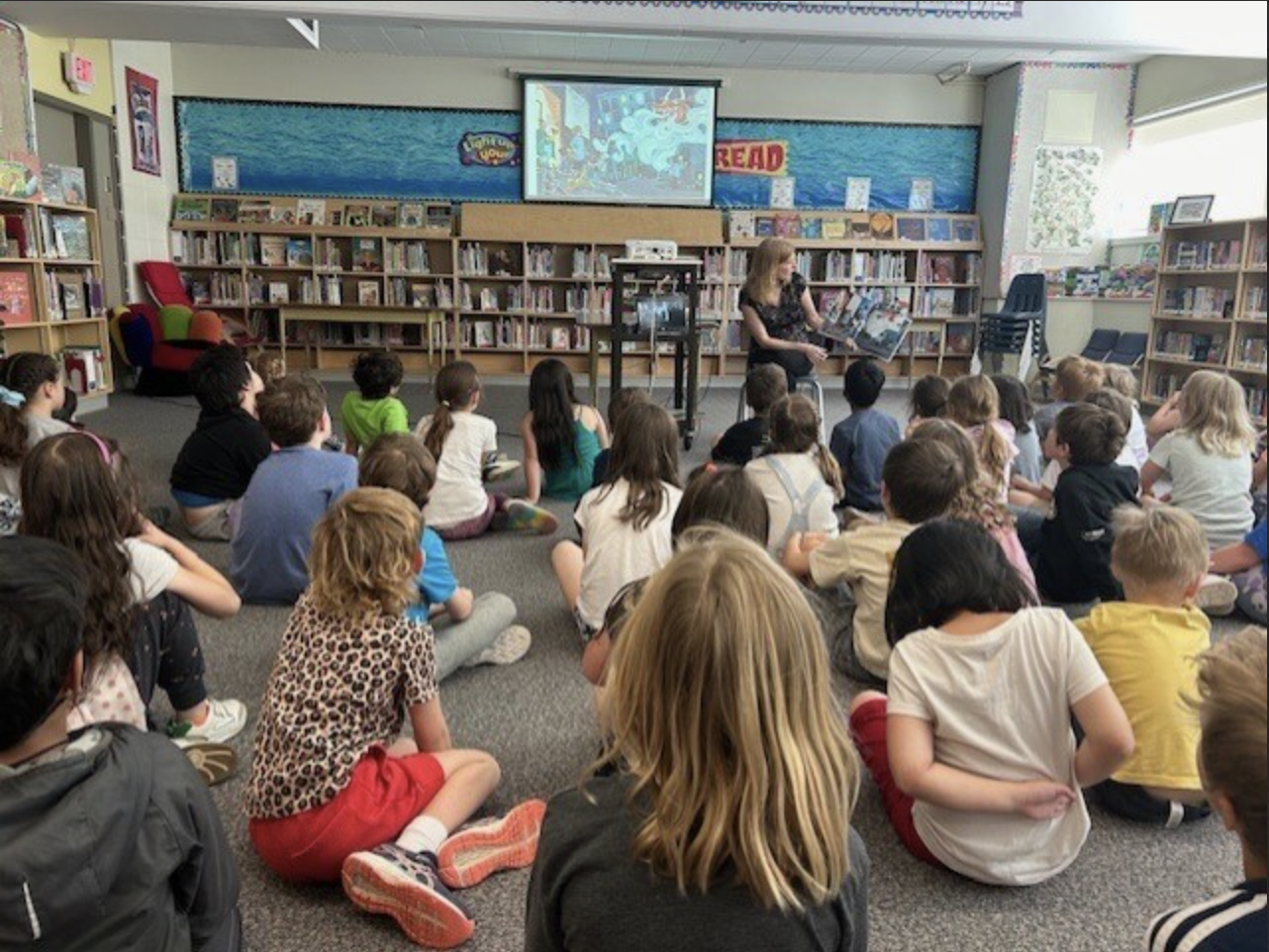
The City of Lost Cats is a nominee for the 2026 Silver Birch Fiction Award. What does this recognition mean for you, and what do you hope students across Canada connect with most as they read it through the Forest of Reading program?
I’m SO EXCITED about the Forest of Reading and I can’t wait to visit Toronto this spring. Reader’s choice awards are the absolute best kind, because they put the power of choice where it belongs, in the hands of kids. Whether or not they choose The City of Lost Cats as their favourite, I hope readers find stories to inspire them. (I’ve been reading some of the other Silver Birch nominees, and I know there are many fabulous options!)
You live in Vancouver, a city with its own complex housing landscape and vibrant artistic community. Is there a favourite local spot where you like to write or find creative inspiration?
In the past year, I’ve taken a tour of the murals downtown, attended a book talk with a famous chef, and attended a play in which all the performers ran on treadmills for the entire show. There are always new things to discover here! I also love teaching at the University of British Columbia, where I’ve worked for the past five years. My students are full of energy and imagination. They give me so much hope for the future.
What is next for Tanya Lloyd Kyi?
I have a new non-fiction book out called Feeling Your Feelings: The Head-to-Toe Science of Emotions, all about the science of emotion. And maybe I’ll go back to that story about computer sleuths… who knows?
~
The City of Lost Cats is a delightful and thought-provoking read that blends humour, heart, and important social themes in a way that resonates with young readers. Tanya Lloyd Kyi’s storytelling reminds us that even the smallest voices can make a big difference when they come together. Whether readers are drawn in by the quirky animal characters or Fiona’s inspiring determination, this novel is sure to spark meaningful conversations and a deeper appreciation for community. Interested in more Silver Birch Fiction nominees from Forest of Reading? Check out our recent interview with Toronto-based Emily Diebert for Bea Mullins Takes a Shot or Nicki Pau Preto’s The Last Hope School for Magical Delinquents.
Related Articles View All
From Stop-Motion to Stories of Freedom: Family Learning at Doors Open Chatham-Kent
Explore stop-motion animation, Black history, art, nature and more at 13 Doors Open Chatham-Kent sites offering family-friendly learning across the region.
From the High Arctic to a Historic Schoolhouse: Family Learning at Doors Open Quinte West
Explore the High Arctic, aviation history, dinosaurs and more at 10 Doors Open Quinte West sites offering hands-on learning for the whole family.
Beyond the Falls: Science, History and Innovation at Doors Open Niagara Falls
Go beyond the Falls with 13 Doors Open Niagara Falls sites offering hands-on family learning through science, technology, history, art and culture.
