

Do you remember reading OWL Magazine as a child? For generations of Canadians, flipping through the pages of OWL has been a beloved part of growing up, from fascinating science discoveries and fun facts to puzzles, comics and activities that inspire curiosity and a love of learning. Celebrating 50 years, this iconic Canadian children's magazine continues to engage young readers ages 9 to 13, encouraging them to explore the world around them. Teachers on Call is honoured to be part of this milestone, with our President & CEO, Joanne Sallay, invited to contribute to the November 2026 issue's Advice from an Expert column, sharing practical advice with young readers. Joanne tackles a challenge familiar to elementary and high school students alike: procrastination and the struggle to complete homework and study on time. Keep reading to discover Joanne's advice in OWL Magazine, along with practical strategies from our team of educators to help students overcome procrastination, build stronger study habits and become more confident, independent learners.
Celebrating 50 Years of OWL Magazine: A Canadian Childhood Favourite
Did you know that OWL stands for Outdoors and Wildlife? First published in Toronto in January 1976, OWL Magazine was created to inspire Canadian children to explore nature, science and the world around them. What began as a magazine about wildlife and the great outdoors has grown into a beloved Canadian publication celebrating its 50th anniversary in 2026, with Owlkids still headquartered in Toronto today! The milestone has been recognized by publishing industry media, including Publishers Weekly and Quill & Quire.

For generations of Canadian children, OWL has been much more than a magazine. From fascinating discoveries in science, technology and math to amazing animal facts, hands-on STEM activities, comics, puzzles, quizzes, contests and advice from experts, it has made learning an adventure. Today, OWL continues to capture the curiosity of readers ages 9 to 13, encouraging them to ask questions, think creatively, solve problems and discover new interests along the way.
And did you know there's an Owlkids magazine for almost every stage of childhood? Younger readers can enjoy Chirp (ages 3 to 6) and Chickadee (ages 6 to 9), making it possible for children to grow up with these iconic Canadian magazines from preschool through their preteen years.
At Teachers on Call, we are big advocates for recreational reading and STEM learning, recognizing the important role both play in developing curiosity, creativity, critical thinking and problem-solving skills. Since 1984, our family-owned tutoring service has encouraged students to discover the joy of learning, both inside and outside the classroom. Celebrating 50 years of a Canadian publication that shares these values is especially meaningful, and we are proud to contribute to OWL's anniversary year and its tradition of inspiring young minds.
Advice from an Expert: Joanne Sallay Featured in the November 2026 Issue of OWL Magazine
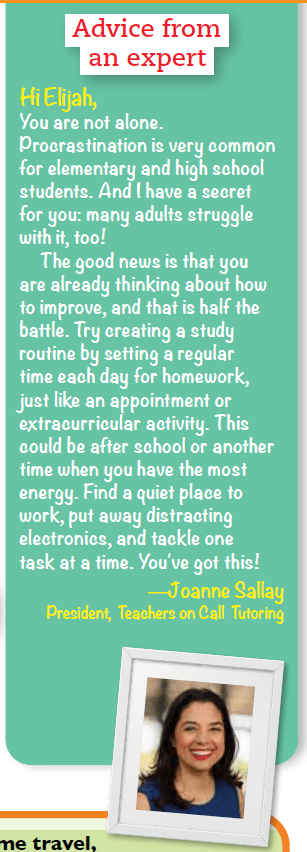
In the November 2026 issue of OWL Magazine, Elijah, an 11-year-old reader, submitted a question to The Buzz, the magazine's “Where OWL Kids Have Their Say” section. Elijah shared a challenge familiar to elementary and high school students alike: procrastination and difficulty completing homework and studying on time. For the Advice from an Expert feature, our very own Joanne Sallay, President & CEO of Teachers on Call, was invited to share her advice on overcoming this common challenge.
Elijah's Question:
“I really struggle with procrastination. I want to do my homework or study, but I always end up putting things off until it's too late. What should I do?”
Joanne's Advice:
Hi Elijah,
You are not alone. Procrastination is very common for elementary and high school students. And I have a secret for you: many adults struggle with it, too!
The good news is that you are already thinking about how to improve, and that is half the battle. Try creating a study routine by setting a regular time each day for homework, just like an appointment or extracurricular activity. This could be after school or another time when you have the most energy. Find a quiet place to work, put away distracting electronics, and tackle one task at a time. You’ve got this!
—Joanne Sallay
Why Do Students Procrastinate?
Procrastination is a common concern we hear from parents at Teachers on Call, regardless of their child's age or grade. Whether it's an elementary student struggling to get started on homework, a middle school student juggling multiple assignments or a high school student putting off studying for an important exam, developing effective time management and study habits can be challenging.
While procrastination is sometimes mistaken for laziness or a lack of motivation, there are many reasons students put off their work. Some children feel overwhelmed by large assignments and do not know where to begin. Others struggle with distractions, organization, time management or perfectionism. Students may also avoid tasks they find difficult or worry about making mistakes.
These challenges are often connected to executive functioning skills, which help students plan, organize, prioritize, manage their time, get started on tasks and follow through on responsibilities. Unlike subject-specific knowledge, these are skills students rely on across every area of their education and throughout their lives.
It's important for parents to understand that struggling with executive functioning skills does not necessarily mean a child has a learning disability or is experiencing academic difficulties. Students of all ages and academic abilities can find organization, time management and task initiation challenging, including high-achieving students and those formally identified as gifted. A student may excel in math, science or reading yet still struggle to begin homework, keep track of assignments or prepare for an upcoming test. Being academically strong and knowing how to manage schoolwork are two different skill sets.
And as Joanne reminded Elijah in OWL Magazine, these challenges don't disappear when we become adults! Many of us still struggle with procrastination, managing competing priorities, staying organized or finding the motivation to tackle tasks we've been putting off. Developing strong executive functioning skills is a lifelong process, making it all the more valuable to establish these habits early.
While executive functioning challenges can affect any student, they can also be particularly important for children with special education needs, who may benefit from individualized strategies and additional support.
This is why academic coaching is such an important part of the support our tutors provide at Teachers on Call. Beyond helping students understand curriculum concepts, our educators frequently work with students on overcoming procrastination, developing consistent study routines, managing assignments and becoming more independent learners. For parents, reinforcing these habits at home can sometimes be easier said than done, particularly when reminders about homework and studying turn into daily disagreements. Having an experienced educator provide guidance, structure and encouragement can help students become more accountable for their schoolwork while taking some of the pressure off parents.
The encouraging news is that these skills can be developed with practice, guidance and consistent routines. Small changes in how students approach their schoolwork can make a meaningful difference in their confidence, productivity and academic success.
6 Practical Tips to Help Students Stop Procrastinating
In her advice to Elijah in OWL Magazine, Joanne emphasized the importance of establishing a consistent homework routine, choosing a time of day when students have the most energy, minimizing distractions and focusing on one task at a time. These simple but effective strategies provide a starting point for students looking to overcome procrastination and take greater ownership of their learning.
Building on Joanne's advice, our team of experienced in-home and online tutors at Teachers on Call shares six practical tips to help elementary and high school students strengthen their study habits, improve time management and become more confident, independent learners.
- Create a Consistent Homework Routine
Encourage your child to set aside a regular time each day for homework and studying. Just like sports practices, music lessons or other extracurricular activities, schoolwork deserves a dedicated place in the family schedule. Some students work best immediately after school, while others benefit from a snack, physical activity or a short break before settling down. The key is finding a routine that works for your child and following it consistently. - Use Chunking to Break Large Assignments into Manageable Steps
A major project or upcoming test can feel overwhelming, particularly when students do not know where to begin. One helpful way to overcome this challenge is through chunking, a strategy that involves breaking schoolwork into smaller, manageable tasks and concentrating on one at a time. For example, instead of writing "Complete science project" on a to-do list, break the assignment into smaller tasks such as choosing a topic, researching information, preparing an outline and completing the final presentation.
Students can also try working in short, focused intervals, such as 20 to 25 minutes, followed by a brief break. Younger children may benefit from even shorter work periods depending on their age and attention span. Each completed chunk creates a sense of accomplishment, builds momentum and makes it easier to move on to the next task. The goal is to make getting started feel less overwhelming and help students experience progress along the way. - Create a Distraction-Free Study Environment
Phones, social media, video games and other electronics can make it difficult for students to maintain focus. Encourage your child to find a quiet, comfortable place to work with the materials they need close at hand. Putting away unnecessary devices and limiting interruptions can help students concentrate on one task at a time. - Use a Planner or Calendar to Stay Organized
Students often procrastinate because they underestimate how much time assignments will take or lose track of upcoming deadlines. A paper agenda, calendar or digital planner can help them visualize their responsibilities and plan ahead. Encourage students to record homework, tests, projects and extracurricular commitments in one place, checking their schedule regularly.
As students become more independent, these organizational habits become increasingly important. - Set Small Goals and Celebrate Progress
Rather than focusing exclusively on grades or finished assignments, recognize the effort students put into improving their habits. Completing homework without reminders, starting a project ahead of schedule or studying consistently throughout the week are all achievements worth celebrating. Positive reinforcement can help students build confidence and develop greater independence. - Ask for Help Before Falling Behind
Sometimes procrastination is a sign that a student does not understand the material or lacks confidence in a particular subject. Encourage your child to ask questions, communicate with teachers and take advantage of extra help available at school, such as homework clubs or additional time with their classroom teacher. If your child already works with a tutor, encourage them to bring challenging assignments to their sessions, or consider arranging tutoring support to help address learning gaps and build confidence. Addressing academic challenges early can prevent frustration from building and help students approach their work with greater confidence.

What Ontario Report Cards Tell Parents About Learning Skills and Work Habits
Did you know that report cards assess more than academic achievement? The challenges Elijah raised in his question to OWL Magazine, including procrastination, time management and completing homework on time, are directly connected to the Learning Skills and Work Habits assessed on Ontario report cards. In fact, these skills are an important part of the provincial reporting cycle, giving parents valuable insight into how their children approach schoolwork, manage responsibilities and develop independence. While academic grades reflect what students are learning, Learning Skills and Work Habits help families understand how students are learning, making report card season an ideal opportunity to identify challenges, celebrate progress and build stronger study habits.
For elementary students (Grades 1 to 8), families receive a Progress Report Card in November, followed by a Provincial Report Card in February and a Final Report Card in June. The November Progress Report Card focuses on how students are progressing toward curriculum expectations rather than assigning traditional subject grades, while the February and June report cards provide formal assessments of academic achievement.
For high school students (Grades 9 to 12), reporting follows a different schedule, typically including midterm and final report cards each semester. Midterm reports provide an important checkpoint on academic achievement and learning habits, giving students an opportunity to address challenges before final evaluations. For schools following a semester system, final report cards are generally issued in February and June, with June marking the end of the school year.
Beyond academic marks, Ontario schools also assess six Learning Skills and Work Habits throughout Grades 1 to 12. These skills help students succeed in the classroom while preparing them for post-secondary education, future careers and everyday responsibilities.
The six Learning Skills and Work Habits are evaluated separately from academic achievement, offering parents valuable insight into how their children approach learning, manage responsibilities and work with others.
Here is what each of the six Learning Skills and Work Habits means and how developing these skills can help students overcome procrastination:
1. Responsibility
Taking ownership of schoolwork, meeting commitments, completing assignments on time and managing behaviour.
How It Connects to Procrastination: Students who develop responsibility learn to recognize deadlines, follow through on commitments and take greater accountability for completing homework without constant reminders.
2. Organization
Planning and prioritizing tasks, managing time, keeping track of materials and using resources effectively.
How It Connects to Procrastination: Strong organizational skills help students break assignments into manageable steps, plan ahead for tests and avoid the stress of leaving work until the last minute.
3. Independent Work
Staying focused, following instructions, using classroom time effectively and completing tasks with increasing independence.
How It Connects to Procrastination: Students who strengthen their ability to work independently become more confident starting assignments, maintaining concentration and completing tasks without relying on frequent adult reminders.
4. Collaboration
Working respectfully and effectively with others, sharing responsibilities, listening to different perspectives and contributing to group goals.
How It Connects to Procrastination: Collaboration helps students manage shared deadlines, contribute their fair share to group projects and communicate with classmates when they need support or clarification.
5. Initiative
Showing curiosity, approaching new challenges positively, exploring ideas and taking action without always waiting to be prompted.
How It Connects to Procrastination: Initiative is particularly important for students who struggle to get started. Learning to take that first step, even when a task feels difficult, can help students overcome avoidance and build confidence.
6. Self-Regulation
Setting personal goals, monitoring progress, reflecting on strengths and challenges, managing responses to difficulties and seeking help when needed.
How It Connects to Procrastination: Self-regulation helps students recognize distractions, manage frustration, maintain motivation and adjust their approach when a study strategy is not working.
What Should Parents Look for on Report Cards?
Ontario's Learning Skills and Work Habits are evaluated using four descriptors: Excellent (E), Good (G), Satisfactory (S) and Needs Improvement (N). These assessments are reported separately from subject grades, helping families identify strengths and areas where students may benefit from additional guidance.
For example, a student may earn strong marks in mathematics but receive feedback indicating that organization or independent work needs improvement. This does not necessarily reflect a lack of academic ability. Instead, it may highlight an opportunity to strengthen executive functioning skills, establish better routines or develop greater independence.
Report card comments about organization, responsibility, initiative or self-regulation can provide valuable clues about why a student may be procrastinating. Rather than focusing only on academic grades, parents can use this feedback to start constructive conversations about learning habits and set achievable goals together.
For a closer look at Ontario's assessment and reporting requirements, read our recent blog, Ontario Report Cards 2026–2027: What's Changing & What Parents Need to Know.
How Teachers on Call Supports Executive Functioning Skills and Academic Success
At Teachers on Call, we know that academic success involves more than understanding the provincial curriculum. Students also need strong executive functioning skills, including time management, planning, organization, task initiation and the ability to follow through on responsibilities.
While many families turn to tutoring for curriculum support in subjects such as math, science, French and English, a significant part of the work we do at Teachers on Call also involves helping students develop the learning habits and organizational strategies they need to succeed across all subjects.
Our experienced in-home and online tutors regularly work one-on-one with elementary and high school students who need additional support with managing homework, prioritizing assignments, preparing for tests, meeting deadlines and overcoming procrastination.
Through personalized online and in-home tutoring and academic coaching, our teachers help students develop practical strategies tailored to their individual learning needs. This may include establishing consistent homework routines, using work chunking to break large assignments into manageable steps, creating study schedules or learning how to balance academic responsibilities with extracurricular activities.
These strategies also help students strengthen the Learning Skills and Work Habits assessed on Ontario report cards, particularly responsibility, organization, independent work, initiative and self-regulation.
These skills become increasingly important as students transition from elementary to high school, where they are expected to manage multiple subjects, larger assignments and greater academic independence.
Our goal is not simply to help students complete today's homework, but to equip them with the overall skills, confidence and independence to manage tomorrow's academic challenges.
From OWL Magazine to the Classroom: Building Skills for Lifelong Success
For 50 years, OWL Magazine has inspired Canadian children to explore their curiosity, ask questions, solve problems and discover the joy of learning. Joanne's advice to Elijah in the November 2026 issue reinforces an equally important lesson: learning how to learn is just as valuable as mastering the subjects taught in school.
Procrastination is something many children, teenagers and adults struggle with, but it does not have to become a lifelong habit. By establishing consistent routines, using work chunking to make assignments more manageable, minimizing distractions and celebrating small achievements, students can gradually develop greater confidence and independence.
As Ontario's six Learning Skills and Work Habits remind us, academic success is about more than grades. Responsibility, organization, independent work, collaboration, initiative and self-regulation are essential skills that prepare students for success in school, post-secondary education, future careers and everyday life.
For parents, the most important takeaway is that these skills can be taught, practised and strengthened over time. Whether your child is struggling to begin homework, feeling overwhelmed by assignments or finding it difficult to manage competing priorities, encouragement, practical strategies and consistent support can make a meaningful difference.
Teachers on Call is proud to contribute to OWL Magazine's 50th anniversary year and celebrate a Canadian publication that has inspired generations of young readers to become curious, confident and lifelong learners.
Interested in introducing your child to OWL Magazine? Families can explore Owlkids contests for opportunities to win prizes. Subscriptions and digital issues are also available through the official Owlkids website or national magazine subscription services.
Looking for additional support with homework, study habits or executive functioning skills? Our experienced tutors at Teachers on Call are here to help through personalized in-home and online tutoring. Learn more about our tutoring and academic coaching services.
Related Articles View All
Ontario Report Cards 2026–2027: What's Changing & What Parents Need to Know
Ontario report cards are changing for 2026–2027. From paper elementary report cards to new high school grading rules and mandatory exams, discover what parents need to know and how to support student success.
Making STEM Fun for Kids: Canadian Teacher Stephen Holmes on "The Adventures of Charlotte and Cameron"
Canadian teacher and author Stephen Holmes shares how The Adventures of Charlotte and Cameron inspires children to explore STEM through interactive stories, curiosity and creative problem-solving.
